Boiler Replacement in Glen Oaks, Queens
Comprehensive guidance on residential equipment sizing, steam vs. hydronic replacements, oil-to-gas conversions, venting, and DOB-compliant heating installations.
When Is Replacement More Appropriate Than Another Repair?
Boilers are the mechanical heartbeat of residential properties in Glen Oaks and neighboring Floral Park (Queens). While routine servicing can resolve failing flame sensors, stuck aquastats, and leaking valves, there comes a point where investing additional money into an aging heating plant becomes counterproductive.
Primary indicators that suggest professional boiler replacement Glen Oaks Queens homeowners should consider include:
- Fractured or Leaking Cast-Iron Sections: Severe thermal stress or internal corrosion can crack the cast-iron heat exchanger. Section replacement is rarely cost-effective or warranted on systems exceeding 15 to 20 years of age.
- Chronic Multi-Component Failure: When emergency service calls become an annual ritual—replacing transformers, gas controls, relief valves, and circulators in quick succession—a new boiler installation restores long-term mechanical reliability.
- Obsolete Safety Controls: Sourcing replacement components for legacy boilers with outdated atmospheric burners or obsolete safety switches often leads to unacceptably long heating downtime in mid-winter.
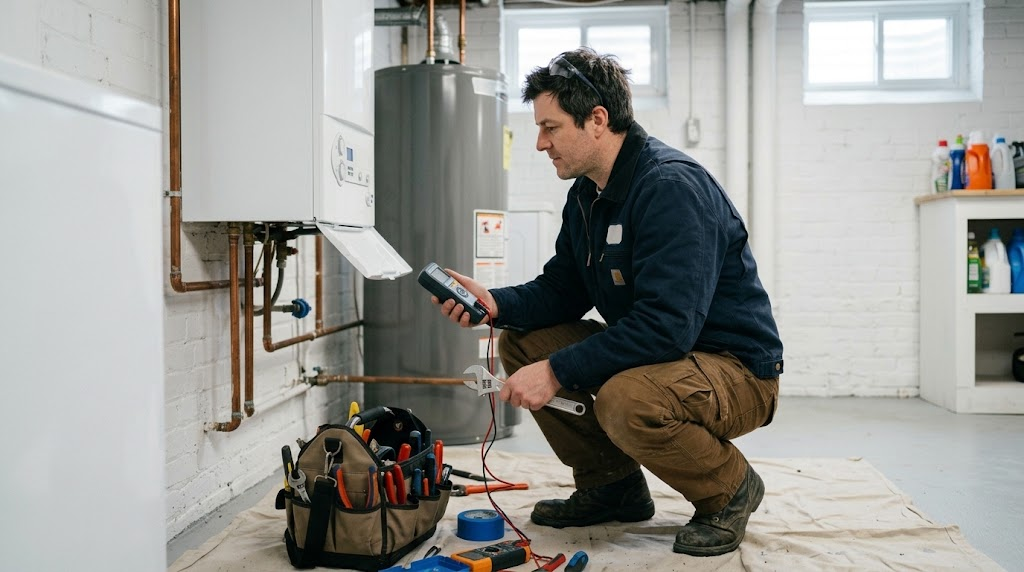
Equipment Sizing: Steam vs. Hydronic Considerations
Proper sizing is the single most critical factor in new boiler performance. Sizing mistakes cause persistent complaints throughout the life of the unit:
Steam Heating Sizing (EDR)
In single-pipe steam systems common across Glen Oaks homes near Union Turnpike, the boiler MUST be sized to match the total connected radiation load (calculated as Equivalent Direct Radiation, or EDR). The boiler must generate precisely enough steam volume to fill every radiator simultaneously. An undersized steam boiler will struggle to heat top-floor bedrooms, while an oversized unit creates rapid short cycles and uneven heat.
Learn About Radiator & Steam Balancing →Hydronic Hot-Water Sizing (Manual J)
In closed-loop hydronic heating, equipment sizing is determined by the heat loss of the structure itself (Manual J calculation), accounting for insulation, window exposures, and square footage. Pairing the correct BTU capacity with appropriate multizone circulator pumps ensures balanced baseboard heating throughout every floor.
Learn About Boiler Pressure & Circulators →Combustion, Venting & Oil-to-Gas Conversions
Many older properties along the Grand Central Parkway corridor still operate legacy oil-fired boilers. Transitioning to a modern natural gas boiler eliminates fuel delivery scheduling, frees up valuable basement space previously occupied by oil tanks, and simplifies seasonal burner maintenance.
However, converting or replacing equipment requires meticulous chimney and venting evaluation. Atmospheric gas appliances require a properly sized, unobstructed chimney flue with a clay or stainless-steel liner to prevent acidic condensation from deteriorating masonry. For high-efficiency condensing boilers, specialized direct-vent PVC or polypropylene piping routed through an exterior wall may be engineered.
All installations require compliance with the NYC Department of Buildings (DOB), gas utility authorization, and adherence to New York City fuel gas and mechanical codes. Working with a qualified plumbing contractor ensures all permits, safety shutoffs, and backflow preventers are legally filed and signed off.
Considering a New Boiler in Glen Oaks?
Schedule an on-site equipment sizing consultation and review your heating system options.
Frequently Asked Questions About Boiler Replacement
For steam heating systems, sizing is strictly dictated by the connected radiation load (the total square feet of equivalent direct radiation / EDR across all cast-iron radiators), not simply the building square footage. Oversizing causes rapid short-cycling, high fuel bills, and uneven steam distribution, while undersizing leaves upper radiators cold. For hydronic hot-water systems, an accurate Manual J heat-loss calculation determines the required BTU output.
In New York City, replacing a heating boiler requires filing an application and obtaining a permit through the NYC Department of Buildings (DOB), as well as coordination with the gas utility for gas service authorization. Following installation, qualified inspections and sign-offs ensure the equipment complies with NYC fuel gas and mechanical codes.
Converting from fuel oil to natural gas eliminates oil deliveries, removes indoor storage tanks, and allows for cleaner burner operation. However, feasibility depends on gas main availability in your street, adequate chimney flue lining, and utility gas meter capacity. An on-site evaluation determines whether conversion or in-kind replacement makes the best practical sense.
Related Heating Resources
Explore our related diagnostic services for Queens property owners: