Steam Heat & Radiator Repair in Glen Oaks, Queens
Specialized solutions for cold cast-iron radiators, loud water hammer, stuck steam air vents, leaking packless valves, and improper pipe slope.
Diagnosing Steam Heat Dynamics in Glen Oaks Residences
Steam heating is an elegant, time-tested heating method found in countless residences throughout Glen Oaks Village and surrounding Queens neighborhoods near Floral Park and Union Turnpike. However, steam systems are highly sensitive to delicate physics: steam distribution, venting velocity, gravity condensate return, and piping pitch.
When a room fails to heat or sounds like a sledgehammer hitting metal, homeowners often jump to replacing the boiler or swapping arbitrary parts. In reality, expert radiator repair Glen Oaks Queens service requires diagnosing the entire thermodynamic loop before replacing any hardware.
Our technicians assess how steam travels from the basement boiler header, through main distribution risers, past main line quick-vents, and into individual room radiators. Correcting air resistance and pitch defects restores silent, uniform comfort across the entire house.
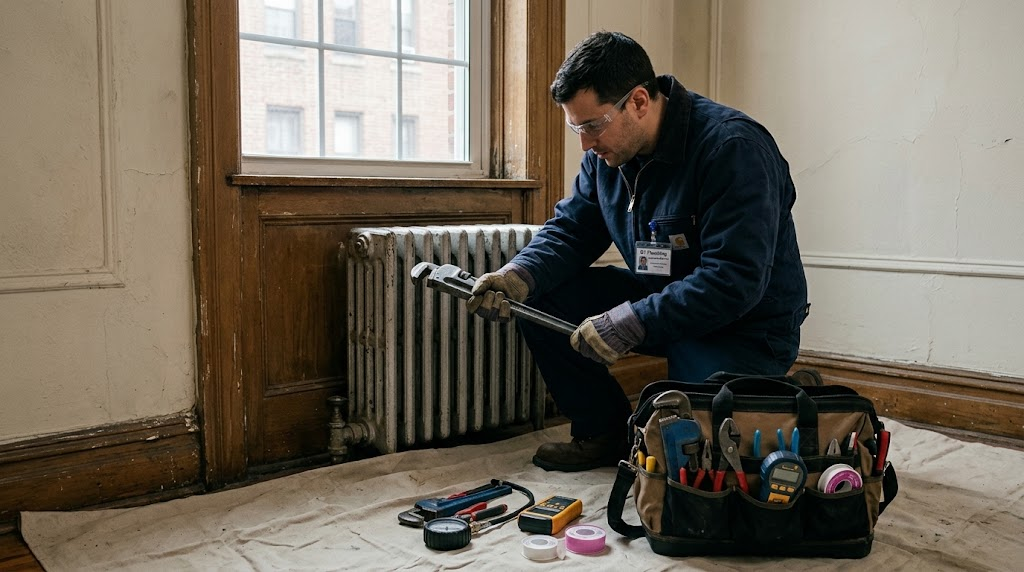
Common Steam Radiator Symptoms & Mechanical Causes
Cold Radiators
When a radiator stays cold while the boiler operates, trapped air is usually the culprit. In single-pipe steam, cold air must be expelled through the radiator air vent. If the vent orifice is clogged with mineral crust or paint, steam cannot push inside.
Banging Pipes (Water Hammer)
Water hammer occurs when steam travelling at 30 to 60 mph slams into pools of condensed water trapped in horizontal piping or inside the radiator base. Correcting floor sag and re-establishing a steady backward pitch toward the supply valve drains the water instantly.
Hissing & Leaking Vents
Air vents should hiss softly for a few minutes as cold air vents, then seal shut tightly when steam arrives. A vent that hisses constantly or spurts rusty water has lost its thermostatic float seal or indicates boiler water foaming.
Why Systematic Steam Balancing Matters
Single-pipe steam heating functions on balance. If the basement steam main vents slowly, steam enters the nearest first-floor radiators first, satisfying the thermostat on the first floor before steam ever reaches second-floor or rear bedrooms.
By installing high-capacity Gorton or Hoffman quick-vents on the ends of the basement steam mains, steam rapidly charges the entire horizontal network. Once mains are pressurized with steam, smaller calibrated radiator vents can be tuned by room size—allowing top floors to vent faster and warm up concurrently with the ground floor.
This balancing eliminates cold rooms without increasing boiler firing cycles or raising fuel costs. It also protects older packless radiator valves from leaking around the stem onto finished hardwood floors.
Tired of Clanging Pipes or Frigid Radiators?
Our steam heating technicians diagnose vents, valves, and piping pitch across Glen Oaks.
Frequently Asked Questions About Radiator Repair
In a steam system, air must escape before steam can enter. If the thermostatic air vent on the side of the radiator is corroded, paint-clogged, or stuck shut, the trapped air forms a barrier that prevents steam from entering. Alternatively, a partially closed manual supply valve or improper pitch preventing water drainage can cause the radiator to remain cold.
No, never in a single-pipe steam system. Single-pipe radiator valves must always be 100% fully open or 100% fully closed. In single-pipe steam, incoming steam and returning condensed water share the exact same pipe and valve port. Partially throttling the valve constricts water return, causing violent banging (water hammer) and water spitting from the air vent.
Air vents contain a thermostatic float designed to close when steam or liquid reaches it. If sediment from the boiler water coats the float needle, the valve remains open, allowing hissing steam and dirty water to escape. High boiler water levels or severe boiler water surging can also flood the steam risers.
Related Heating Resources
Explore our related diagnostic services for Queens property owners: